
Albania Population: 3,057,220
«  Previous Country | Next Country Previous Country | Next Country  » » | 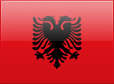 |
| History | |
| Albania declared its independence from the Ottoman Empire in 1912, but was conquered by Italy in 1939 and occupied by Germany in 1943. Communist partisans took over the country in 1944. Albania allied itself first with the USSR (until 1960), and then with China (to 1978). In the early 1990s, Albania ended 46 years of isolated communist rule and established a multiparty democracy. The transition has proven challenging as successive governments have tried to deal with high unemployment, widespread corruption, dilapidated infrastructure, powerful organized crime networks, and combative political opponents. Albania has made progress in its democratic development since it first held multiparty elections in 1991, but deficiencies remain. Most of Albania's post-communist elections were marred by claims of electoral fraud; however, international observers judged elections to be largely free and fair since the restoration of political stability following the collapse of pyramid schemes in 1997. Albania joined NATO in April 2009 and in June 2014 became an EU candidate. Albania in April 2017 received a European Commission recommendation to open EU accession negotiations following the passage of historic EU-mandated justice reforms in 2016. Although Albania's economy continues to grow, it has slowed, and the country is still one of the poorest in Europe. A large informal economy and a weak energy and transportation infrastructure remain obstacles. |

|  |
| |
| Geography | |
| |
| Location: | Southeastern Europe, bordering the Adriatic Sea and Ionian Sea, between Greece to the south and Montenegro and Kosovo to the north |
| Geographic coordinates: | 41 00 N, 20 00 E |
| Area: | total: 28,748 sq km land: 27,398 sq km water: 1,350 sq km Size comparison: slightly smaller than Maryland |
| Land Boundaries: | total: 691 km border countries (4): Greece 212 km, Kosovo 112 km, Macedonia 181 km, Montenegro 186 km |
| Coastline: | 362 km |
| Maritime claims: | territorial sea: 12 nm continental shelf: 200-m depth or to the depth of exploitation |
| Climate: | mild temperate; cool, cloudy, wet winters; hot, clear, dry summers; interior is cooler and wetter |
| Terrain: | mostly mountains and hills; small plains along coast |
| Natural resources: | petroleum, natural gas, coal, bauxite, chromite, copper, iron ore, nickel, salt, timber, hydropower, arable land |
| Land use: | agricultural land: 43.1% (2016 est.) arable land: 22.6% (2016 est.) permanent crops: 3% (2016 est.) permanent pasture: 17.5% (2016 est.) forest: 28.12% (2016 est.) other: 28.75% (2016 est.) |
| Irrigated land: | 3,537 sq km (2014) |
| Natural hazards: | destructive earthquakes; tsunamis occur along southwestern coast; floods; drought |
| Current Environment Issues: | deforestation; soil erosion; water pollution from industrial and domestic effluents; air pollution from industrial and power plants; loss of biodiversity due to lack of resources for sound environmental management |
| International Environment Agreements: | party to: Air Pollution, Biodiversity, Climate Change, Climate Change-Kyoto Protocol, Desertification, Endangered Species, Hazardous Wastes, Law of the Sea, Ozone Layer Protection, Wetlands signed, but not ratified: none of the selected agreements |
| ^Back to Top | |
| People | |
| |
| Nationality: | noun: Albanian(s) adjective: Albanian |
| Ethnic groups: | Albanian 82.6%, Greek 0.9%, other 1% (including Vlach, Romani, Macedonian, Montenegrin, and Egyptian), unspecified 15.5% (2011 est.) note: data represent population by ethnic and cultural affiliation |
| Languages: | Albanian 98.8% (official - derived from Tosk dialect), Greek 0.5%, other 0.6% (including Macedonian, Romani, Vlach, Turkish, Italian, and Serbo-Croatian), unspecified 0.1% (2011 est.) |
| Religions: | Muslim 56.7%, Roman Catholic 10%, Orthodox 6.8%, atheist 2.5%, Bektashi (a Sufi order) 2.1%, other 5.7%, unspecified 16.2% (2011 est.) note: all mosques and churches were closed in 1967 and religious observances prohibited; in November 1990, Albania began allowing private religious practice |
| Population: | 3,057,220 (July 2018 est.) |
| Age structure: | 0-14 years: 17.84% (male 287,750 /female 257,675) 15-24 years: 16.84% (male 267,695 /female 247,230) 25-54 years: 41.31% (male 604,250 /female 658,773) 55-64 years: 11.77% (male 176,420 /female 183,391) 65 years and over: 12.23% (male 174,752 /female 199,284) (2018 est.) |
| Dependency ratios: | total dependency ratio: 44 (2015 est.) youth dependency ratio: 26 (2015 est.) elderly dependency ratio: 18.1 (2015 est.) potential support ratio: 5.5 (2015 est.) |
| Median age: | total: 33.4 years male: 32 years female: 34.7 years (2018 est.) |
| Population growth rate: | 0.3% (2018 est.) |
| Birth rate: | 13.2 births/1,000 population (2018 est.) |
| Death rate: | 6.9 deaths/1,000 population (2018 est.) |
| Net migration rate: | -3.3 migrant(s)/1,000 population (2018 est.) |
| Urbanization: | urban population: 60.3% of total population (2018) rate of urbanization: 1.69% annual rate of change (2015-20 est.) |
| Major urban areas - population: | 476,000 TIRANA (capital) (2018) |
| Sex ratio: | at birth: 1.09 male(s)/female 0-14 years: 1.12 male(s)/female 15-24 years: 1.08 male(s)/female 25-54 years: 0.92 male(s)/female 55-64 years: 0.96 male(s)/female 65 years and over: 0.88 male(s)/female total population: 0.98 male(s)/female (2018 est.) Mother's mean age at first birth: 24.8 years (2017/18 est.) |
| Maternal mortality rate: | 29 deaths/100,000 live births (2015 est.) |
| Infant mortality rate: | total: 11.6 deaths/1,000 live births male: 12.9 deaths/1,000 live births female: 10.1 deaths/1,000 live births (2018 est.) |
| Life expectancy at birth: | total population: 78.6 years male: 76 years female: 81.6 years (2018 est.) |
| Total fertility rate: | 1.52 children born/woman (2018 est.) |
| Contraceptive prevalence rate: | 46% (2017/18) |
| Physicians density: | 1.2 physicians/1,000 population (2016) |
| Hospital bed density: | 2.9 beds/1,000 population (2013) |
| Drinking water source: | improved: urban: 84.3% of population rural: 81.8% of population total: 83.6% of population unimproved: urban: 15.7% of population rural: 18.2% of population total: 16.4% of population (2015 est.) |
| Sanitation facility access: | improved: urban: 95.5% of population (2015 est.) rural: 90.2% of population (2015 est.) total: 93.2% of population (2015 est.) unimproved: urban: 4.5% of population (2015 est.) rural: 9.8% of population (2015 est.) total: 6.8% of population (2015 est.) |
| HIV/AIDS - adult prevalence rate: | <.1 (2017 est.) |
| HIV/AIDS - people living with HIV/AIDS: | 1,400 (2017 est.) |
| HIV/AIDS - deaths: | <100 (2017 est.) |
| Obesity - adult prevalence rate: | 21.7% (2016) |
| Children under the age of 5 years underweight: | 1.5% (2017) |
| Education expenditures: | 4% of GDP (2016) |
| Literacy: | definition: age 15 and over can read and write (2015 est.) total population: 97.6% male: 98.4% female: 96.9% (2015 est.) |
| School life expectancy (primary to tertiary education): | total: 15 years male: 15 years female: 16 years (2017) Unemployment, youth ages 15-24: total: 31.9% male: 34.2% female: 27.7% (2017 est.) |
| ^Back to Top | |
| Government | |
| |
| Country name: | conventional long form: Republic of Albania conventional short form: Albania local long form: Republika e Shqiperise local short form: Shqiperia former: People's Socialist Republic of Albania etymology: the English-language country name seems to be derived from the ancient Illyrian tribe of the Albani; the native name "Shqiperia" is derived from the Albanian word "Shqiponje" ("Eagle") and is popularly interpreted to mean "Land of the Eagles" |
| Government type: | parliamentary republic |
| Capital: | name: Tirana (Tirane) geographic coordinates: 41 19 N, 19 49 E time difference: UTC+1 (6 hours ahead of Washington, DC, during Standard Time) daylight saving time: +1hr, begins last Sunday in March; ends last Sunday in October etymology: the name Tirana first appears in a 1418 Venetian document; the origin of the name is unclear, but may derive from Tirkan fortress, whose ruins survive on the slopes of Dajti mountain and which overlooks the city |
| Administrative divisions: | 12 counties (qarqe, singular - qark); Berat, Diber, Durres, Elbasan, Fier, Gjirokaster, Korce, Kukes, Lezhe, Shkoder, Tirane, Vlore |
| Independence: | 28 November 1912 (from the Ottoman Empire) |
| National holiday: | Independence Day, 28 November (1912) also known as Flag Day |
| Constitution: | history: several previous; latest approved by the Assembly 21 October 1998, adopted by referendum 22 November 1998, promulgated 28 November 1998 amendments: proposed by at least one-fifth of the Assembly membership; passage requires at least a two-thirds majority vote by the Assembly; referendum required only if approved by two-thirds of the Assembly; amendments approved by referendum effective upon declaration by the president of the republic; amended several times, last in 2016 (2017) |
| Legal system: | civil law system except in the northern rural areas where customary law known as the "Code of Leke" is still present |
| Suffrage: | 18 years of age; universal |
| Executive branch: | chief of state: President of the Republic Ilir META (since 24 July 2017) head of government: Prime Minister Edi RAMA (since 10 September 2013); Deputy Prime Minister Senida MESI (since 13 September 2017) cabinet: Council of Ministers proposed by the prime minister, nominated by the president, and approved by the Assembly elections/appointments: president indirectly elected by the Assembly for a 5-year term (eligible for a second term); a candidate needs three-fifths majority vote of the Assembly in 1 of 3 rounds or a simple majority in 2 additional rounds to become president; election last held in 4 rounds on 19, 20, 27, and 28 April 2017 (next election to be held in 2022); prime minister appointed by the president on the proposal of the majority party or coalition of parties in the Assembly election results: Ilir META elected president; Assembly vote - 87 - 2 in fourth round |
| Legislative branch: | description: unicameral Assembly or Kuvendi (140 seats; members directly elected in multi-seat constituencies by proportional representation vote to serve 4-year terms) elections: last held on 25 June 2017 (next to be held in 2021) election results: percent of vote by party - PS 48.3%, PD 28.9%, LSI 14.3%, PDIU 4.8%, PSD 1%, other 2.7%; seats by party - PS 74, PD 43, LSI 19, PDIU 3, PSD 1; composition - men 108, women 32, percent of women 22.9% |
| Judicial branch: | highest courts: Supreme Court (consists of 19 judges, including the chief justice); Constitutional Court (consists of 9 judges, including the chairman) judge selection and term of office: Supreme Court judges are appointed by the High Judicial Council with the consent of the president to serve single 9-year terms; Supreme Court chairman is elected for a single 3-year term by the court members; appointments of Constitutional Court judges are rotated among the president, Parliament, and Supreme Court from a list of pre-qualified candidates (each institution selects 3 judges), to serve single 9-year terms; candidates are pre-qualified by a randomly selected body of experienced judges and prosecutors; Constitutional Court chairman is elected by the court members for a single, renewable 3-year term subordinate courts: Courts of Appeal; Courts of First Instance; specialized courts: Court for Corruption and Organized Crime, Appeals Court for Corruption and Organized Crime (responsible for corruption, organized crime and crimes of high officials). |
| Political parties and leaders: | Democratic Party or PD [Lulzim BASHA] Party for Justice, Integration and Unity or PDIU [Shpetim IDRIZI] (formerly part of APMI) Social Democratic Party or PSD [Paskal MILO] Socialist Movement for Integration or LSI [Monika KRYEMADHI] Socialist Party or PS [Edi RAMA] |
| International organization participation: | BSEC, CD, CE, CEI, EAPC, EBRD, EITI (compliant country), FAO, IAEA, IBRD, ICAO, ICC (national committees), ICCt, ICRM, IDA, IDB, IFAD, IFC, IFRCS, ILO, IMF, IMO, Interpol, IOC, IOM, IPU, ISO (correspondent), ITU, ITUC (NGOs), MIGA, NATO, OAS (observer), OIC, OIF, OPCW, OSCE, PCA, SELEC, UN, UNCTAD, UNESCO, UNIDO, UNWTO, UPU, WCO, WFTU (NGOs), WHO, WIPO, WMO, WTO |
| National symbol(s): | black double-headed eagle; national colors: red, black |
| National anthem: | name: "Hymni i Flamurit" (Hymn to the Flag) lyrics/music: Aleksander Stavre DRENOVA/Ciprian PORUMBESCU note: adopted 1912 |
| Diplomatic representation in the US: | chief of mission: Ambassador Floreta FABER (since 18 May 2015) chancery: 2100 S Street NW, Washington, DC 20008 telephone: [1] (202) 223-4942 FAX: [1] (202) 628-7342 consulate(s) general: New York |
| Diplomatic representation from the US: | chief of mission: Ambassador Donald LU (since 13 January 2015) embassy: Rruga e Elbasanit, 103, Tirana mailing address: US Department of State, 9510 Tirana Place, Dulles, VA 20189-9510 telephone: [355] (4) 2247-285 FAX: [355] (4) 2232-222 |
| ^Back to Top | |
| Economy | |
Albania, a formerly closed, centrally-planned state, is a developing country with a modern open-market economy. Albania managed to weather the first waves of the global financial crisis but, the negative effects of the crisis caused a significant economic slowdown. Since 2014, Albania’s economy has steadily improved and economic growth reached 3.8% in 2017. However, close trade, remittance, and banking sector ties with Greece and Italy make Albania vulnerable to spillover effects of possible debt crises and weak growth in the euro zone. Remittances, a significant catalyst for economic growth, declined from 12-15% of GDP before the 2008 financial crisis to 5.8% of GDP in 2015, mostly from Albanians residing in Greece and Italy. The agricultural sector, which accounts for more than 40% of employment but less than one quarter of GDP, is limited primarily to small family operations and subsistence farming, because of a lack of modern equipment, unclear property rights, and the prevalence of small, inefficient plots of land. Complex tax codes and licensing requirements, a weak judicial system, endemic corruption, poor enforcement of contracts and property issues, and antiquated infrastructure contribute to Albania's poor business environment making attracting foreign investment difficult. Since 2015, Albania has launched an ambitious program to increase tax compliance and bring more businesses into the formal economy. In July 2016, Albania passed constitutional amendments reforming the judicial system in order to strengthen the rule of law and to reduce deeply entrenched corruption. Albania’s electricity supply is uneven despite upgraded transmission capacities with neighboring countries. However, the government has recently taken steps to stem non-technical losses and has begun to upgrade the distribution grid. Better enforcement of electricity contracts has improved the financial viability of the sector, decreasing its reliance on budget support. Also, with help from international donors, the government is taking steps to improve the poor road and rail networks, a long standing barrier to sustained economic growth. Inward foreign direct investment has increased significantly in recent years as the government has embarked on an ambitious program to improve the business climate through fiscal and legislative reforms. The government is focused on the simplification of licensing requirements and tax codes, and it entered into a new arrangement with the IMF for additional financial and technical support. Albania’s three-year IMF program, an extended fund facility arrangement, was successfully concluded in February 2017. The Albanian Government has strengthened tax collection amid moderate public wage and pension increases in an effort to reduce its budget deficit. The country continues to face high public debt, exceeding its former statutory limit of 60% of GDP in 2013 and reaching 72% in 2016. | |
| GDP (purchasing power parity): | $36.01 billion (2017 est.) $34.67 billion (2016 est.) $33.55 billion (2015 est.) note: data are in 2017 dollars; unreported output may be as large as 50% of official GDP |
| GDP (official exchange rate): | $13.07 billion (2017 est.) |
| GDP - real growth rate: | 3.8% (2017 est.) 3.4% (2016 est.) 2.2% (2015 est.) |
| GDP - per capita (PPP): | $12,500 (2017 est.) $12,100 (2016 est.) $11,600 (2015 est.) note: data are in 2017 dollars |
| Gross national saving: | 15.9% of GDP (2017 est.) 16.7% of GDP (2016 est.) 16.9% of GDP (2015 est.) GDP - composition, by end use: household consumption: 78.1% (2017 est.) government consumption: 11.5% (2017 est.) investment in fixed capital: 25.2% (2017 est.) investment in inventories: 0.2% (2017 est.) exports of goods and services: 31.5% (2017 est.) imports of goods and services: -46.6% (2017 est.) GDP - composition, by sector of origin: agriculture: 21.7% (2017 est.) industry: 24.2% (2017 est.) services: 54.1% (2017 est.) |
| Agriculture - products: | wheat, corn, potatoes, vegetables, fruits, olives and olive oil, grapes; meat, dairy products; sheep and goats |
| Industries: | food; footwear, apparel and clothing; lumber, oil, cement, chemicals, mining, basic metals, hydropower |
| Industrial production growth rate: | 6.8% (2017 est.) |
| Labor force: | 1.198 million (2017 est.) |
| Labor force - by occupation: | agriculture: 41.4% industry: 18.3% services: 40.3% (2017 est.) |
| Unemployment rate: | 13.8% (2017 est.) 15.2% (2016 est.) note: these official rates may not include those working at near-subsistence farming |
| Population below poverty line: | 14.3% (2012 est.) |
| Household income or consumption by percentage share: | lowest 10%: 4.1% highest 10%: 19.6% (2015 est.) |
| Distribution of family income - Gini index: | 29 (2012 est.) 30 (2008 est.) |
| Budget: | revenues: 3.614 billion (2017 est.) expenditures: 3.874 billion (2017 est.) |
| Taxes and other revenues: | 27.6% (of GDP) (2017 est.) Budget surplus (+) or deficit (-): -2% (of GDP) (2017 est.) |
| Public debt: | 71.8% of GDP (2017 est.) 73.2% of GDP (2016 est.) |
| Fiscal year: | calendar year |
| Inflation rate (consumer prices): | 2% (2017 est.) 1.3% (2016 est.) |
| Current account balance: | -$908 million (2017 est.) -$899 million (2016 est.) |
| Exports: | $900.7 million (2017 est.) $789.1 million (2016 est.) |
| Exports - commodities: | apparel and clothing, footwear; asphalt, metals and metallic ores, crude oil; cement and construction materials, vegetables, fruits, tobacco |
| Exports - partners: | Italy 53.4%, Kosovo 7.7%, Spain 5.6%, Greece 4.2% (2017) |
| Imports: | $4.103 billion (2017 est.) $3.67 billion (2016 est.) |
| Imports - commodities: | machinery and equipment, foodstuffs, textiles, chemicals |
| Imports - partners: | Italy 28.5%, Turkey 8.1%, Germany 8%, Greece 8%, China 7.9%, Serbia 4% (2017) |
| Reserves of foreign exchange and gold: | $3.59 billion (31 December 2017 est.) $3.109 billion (31 December 2016 est.) |
| Debt - external: | $9.505 billion (31 December 2017 est.) $8.421 billion (31 December 2016 est.) |
| Stock of direct foreign investment - at home: | $6.12 billion (31 December 2016 est.) $5.452 billion (31 December 2015 est.) |
| Market value of publicly traded shares: | n/a |
| Exchange rates: | leke (ALL) per US dollar - 121.9 (2017 est.) 124.14 (2016 est.) 124.14 (2015 est.) 125.96 (2014 est.) 105.48 (2013 est.) |
| ^Back to Top | |
| Energy | |
| |
| Electricity - production: | 7.138 billion kWh (2016 est.) |
| Electricity - consumption: | 5.11 billion kWh (2016 est.) |
| Electricity - exports: | 1.869 billion kWh (2016 est.) |
| Electricity - imports: | 1.827 billion kWh (2016 est.) |
| Electricity - installed generating capacity: | 2.109 million kW (2016 est.) |
| Electricity - from fossil fuels: | 5% of total installed capacity (2016 est.) |
| Electricity - from nuclear fuels: | 0% of total installed capacity (2017 est.) |
| Electricity - from hydroelectric plants: | 95% of total installed capacity (2017 est.) |
| Electricity - from other renewable sources: | 0% of total installed capacity (2017 est.) |
| Crude oil - production: | 16,000 bbl/day (2017 est.) |
| Crude oil - exports: | 17,290 bbl/day (2015 est.) |
| Crude oil - imports: | 0 bbl/day (2015 est.) |
| Crude oil - proved reserves: | 168.3 million bbl (1 January 2018 est.) |
| Refined petroleum products - production: | 5,638 bbl/day (2015 est.) |
| Refined petroleum products - consumption: | 29,000 bbl/day (2016 est.) |
| Refined petroleum products - exports: | 3,250 bbl/day (2015 est.) |
| Refined petroleum products - imports: | 26,660 bbl/day (2015 est.) |
| Natural gas - production: | 50.97 million cu m (2017 est.) |
| Natural gas - consumption: | 50.97 million cu m (2017 est.) |
| Natural gas - exports: | 0 cu m (2017 est.) |
| Natural gas - imports: | 0 cu m (2017 est.) |
| Natural gas - proved reserves: | 821.2 million cu m (1 January 2018 est.) |
| Carbon dioxide emissions from consumption of energy: | 4.5 million Mt (2017 est.) |
| ^Back to Top | |
| Communications | |
| |
| Cellular Phones in use: | total subscriptions: 3,497,950 subscriptions per 100 inhabitants: 115 (2017 est.) |
| Telephone system: | general assessment: consistent with the region; offsetting the deficit of fixed-line capacity, mobile-cellular phone service has been available since 1996; four companies presently providing mobile services and mobile teledensity; Internet broadband services initiated in 2005, and the penetration rate rose to over 65% by 2016; Internet cafes are popular in major urban areas; 1.3 million use mobile broadband services (3G/4G) (2019) domestic: fixed-line 8 per 100, teledensity continues to decline due to heavy use of mobile-cellular telephone services; mobile-cellular telephone use is widespread and generally effective, 115 per 100 for mobile-cellular (2019) international: country code - 355; submarine cables the Adria 1 and Italy-Albania provide connectivity to Italy, Croatia, and Greece; ; a combination submarine cable and land fiber-optic system, provides additional connectivity to Bulgaria, Macedonia, and Turkey; international traffic carried by fiber-optic cable and, when necessary, by microwave radio relay from the Tirana exchange to Italy and Greece |
| Broadcast media: | Albania has more than 65 TV stations, including several that broadcast nationally; Albanian TV broadcasts are also available to Albanian-speaking populations in neighboring countries; many viewers have access to Italian and Greek TV broadcasts via terrestrial reception; Albania's TV stations have begun a government-mandated conversion from analog to digital broadcast; the government has pledged to provide analog-to-digital converters to low-income families affected by this decision; cable TV service is available; 2 public radio networks and roughly 78 private radio stations; several international broadcasters are available (2019) |
| Internet country code: | .al |
| Internet users: | total: 2,016,516 percent of population: 66.4% (July 2016 est.) |
| ^Back to Top | |
| Transportation | |
| |
| Airports: | 4 (2016) |
| Airports (paved runways): | total 4 (2017) 2,438 to 3,047 m: 3 (2017) 1,524 to 2,437 m: 1 (2017) |
| Airports (unpaved runways): | total 1 (2012) 914 to 1,523 m: 1 (2012) |
| Heliports: | 1 (2013) |
| Pipelines: | 498 km gas (a majority of the network is in disrepair and parts of it are missing), 249 km oil (2015) |
| Railways: | total 677 km (447 km of major railway lines and 230 km of secondary lines) (2015) standard gauge: 677 km 1.435-m gauge (2015) |
| Roadways: | total 3,945 km (2018) |
| Waterways: | 41 km (on the Bojana River) (2011) |
| Merchant marine: | total 60 by type: bulk carrier 1, general cargo 50, oil tanker 1, other 8 (2018) |
| Ports and terminals: | major seaport(s): Durres, Sarande, Shengjin, Vlore |
| ^Back to Top | |
| Military | |
| |
| Military branches: | Land Forces Command, Navy Force Command, Air Forces Command (2013) |
| Military service age and obligation: | 19 is the legal minimum age for voluntary military service; 18 is the legal minimum age in case of general/partial compulsory mobilization (2012) |
| Military expenditures: | 1.25% of GDP (2019 est.) 1.15% of GDP (2018) 1.22% of GDP (2017) 1.23% of GDP (2016) 1.16% of GDP (2015) |
| ^Back to Top | |
| Transnational Issues | |
| |
| Disputes - International: | none |
| Refugees and internally displaced persons: | stateless persons: 4,160 (2018) note: 6,369 estimated refugee and migrant arrivals (January 2015-July 2019) |
| Illicit drugs: | active transshipment point for Southwest Asian opiates, hashish, and cannabis transiting the Balkan route and - to a lesser extent - cocaine from South America destined for Western Europe; significant source country for cannabis production; ethnic Albanian narcotrafficking organizations active and expanding in Europe; vulnerable to money laundering associated with regional trafficking in narcotics, arms, contraband, and illegal aliens |
| ^Back to Top | |
«
Previous Country | Next Country »
Source: CIA - The World Factbook