
Sudan Population: 43,120,843
«  Previous Country | Next Country Previous Country | Next Country  » » | 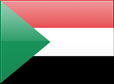 |
| History | |
| Military regimes favoring Islamic-oriented governments have dominated national politics since independence from Anglo-Egyptian co-rule in 1956. Sudan was embroiled in two prolonged civil wars during most of the remainder of the 20th century. These conflicts were rooted in northern economic, political, and social domination of largely non-Muslim, non-Arab southern Sudanese. The first civil war ended in 1972 but another broke out in 1983. Peace talks gained momentum in 2002-04 with the signing of several accords. The final North/South Comprehensive Peace Agreement (CPA), signed in January 2005, granted the southern rebels autonomy for six years followed by a referendum on independence for Southern Sudan. The referendum was held in January 2011 and indicated overwhelming support for independence. South Sudan became independent on 9 July 2011. Sudan and South Sudan have yet to fully implement security and economic agreements signed in September 2012 relating to the normalization of relations between the two countries. The final disposition of the contested Abyei region has also to be decided. The 30-year reign of President Umar Hassan Ahmad al-BASHIR ended in a coup in April 2019, and a Transitional Military Council holds power as of May 2019. Following South Sudan's independence, conflict broke out between the government and the Sudan People's Liberation Movement-North in Southern Kordofan and Blue Nile states (together known as the Two Areas), resulting in a humanitarian crisis affecting more than a million people. A earlier conflict that broke out in the western region of Darfur in 2003, displaced nearly 2 million people and caused thousands of deaths. While some repatriation has taken place, about 1.83 million IDPs remain in Sudan as of May 2019. Fighting in both the Two Areas and Darfur between government forces and opposition has largely subsided, however the civilian populations are affected by low-level violence including inter-tribal conflict and banditry, largely a result of weak rule of law. The UN and the African Union have jointly commanded a Darfur peacekeeping operation (UNAMID) since 2007. Peacekeeping troops have struggled to address insecurity in Darfur and have increasingly become targets for attacks by armed groups. Sudan also has faced refugee influxes from neighboring countries, primarily Ethiopia, Eritrea, Chad, Central African Republic, and South Sudan. Armed conflict, poor transport infrastructure, and denial of access by both the government and armed opposition have impeded the provision of humanitarian assistance to affected populations. |

|  |
| |
| Geography | |
| |
| Location: | north-eastern Africa, bordering the Red Sea, between Egypt and Eritrea |
| Geographic coordinates: | 15 00 N, 30 00 E |
| Area: | total: 1,861,484 sq km land: n/a water: n/a Size comparison: slightly less than one-fifth the size of the US |
| Land Boundaries: | total: 6,819 km border countries (7): Central African Republic 174 km, Chad 1403 km, Egypt 1276 km, Eritrea 682 km, Ethiopia 744 km, Libya 382 km, South Sudan 2158 km note: Sudan-South Sudan boundary represents 1 January 1956 alignment; final alignment pending negotiations and demarcation; final sovereignty status of Abyei region pending negotiations between Sudan and South Sudan |
| Coastline: | 853 km |
| Maritime claims: | territorial sea: 12 nm contiguous zone: 18 nm continental shelf: 200-m depth or to the depth of exploitation |
| Climate: | hot and dry; arid desert; rainy season varies by region (April to November) |
| Terrain: | generally flat, featureless plain; desert dominates the north |
| Natural resources: | petroleum; small reserves of iron ore, copper, chromium ore, zinc, tungsten, mica, silver, gold; hydropower |
| Land use: | agricultural land: 100% (2011 est.) arable land: 15.7% (2011 est.) permanent crops: 0.2% (2011 est.) permanent pasture: 84.2% (2011 est.) forest: 0% (2011 est.) other: 0% (2011 est.) |
| Irrigated land: | 18,900 sq km (2012) |
| Natural hazards: | dust storms and periodic persistent droughts |
| Current Environment Issues: | water pollution; inadequate supplies of potable water; water scarcity and periodic drought; wildlife populations threatened by excessive hunting; soil erosion; desertification; deforestation; loss of biodiversity |
| International Environment Agreements: | party to: Biodiversity, Climate Change, Climate Change-Kyoto Protocol, Desertification, Endangered Species, Hazardous Wastes, Law of the Sea, Ozone Layer Protection, Wetlands signed, but not ratified: none of the selected agreements |
| ^Back to Top | |
| People | |
| |
| Nationality: | noun: Sudanese (singular and plural) adjective: Sudanese |
| Ethnic groups: | unspecified Sudanese Arab (approximately 70%), Fur, Beja, Nuba, Fallata |
| Languages: | Arabic (official), English (official), Nubian, Ta Bedawie, Fur |
| Religions: | Sunni Muslim, small Christian minority |
| Population: | 43,120,843 (July 2018 est.) |
| Age structure: | 0-14 years: 43.07% (male 9,434,634 /female 9,136,951) 15-24 years: 20.22% (male 4,459,335 /female 4,259,341) 25-54 years: 29.8% (male 6,236,954 /female 6,612,593) 55-64 years: 3.93% (male 876,614 /female 819,048) 65 years and over: 2.98% (male 688,391 /female 596,982) (2018 est.) |
| Dependency ratios: | total dependency ratio: 81.6 (2015 est.) youth dependency ratio: 75.4 (2015 est.) elderly dependency ratio: 6.3 (2015 est.) potential support ratio: 15.9 (2015 est.) |
| Median age: | total: 17.9 years male: 17.7 years female: 18.1 years (2018 est.) |
| Population growth rate: | 2.93% (2018 est.) |
| Birth rate: | 34.2 births/1,000 population (2018 est.) |
| Death rate: | 6.7 deaths/1,000 population (2018 est.) |
| Net migration rate: | 1.9 migrant(s)/1,000 population (2018 est.) |
| Urbanization: | urban population: 34.6% of total population (2018) rate of urbanization: 3.17% annual rate of change (2015-20 est.) |
| Major urban areas - population: | 5.534 million KHARTOUM (capital) 834,000 Nyala (2018) |
| Sex ratio: | at birth: 1.05 male(s)/female 0-14 years: 1.03 male(s)/female 15-24 years: 1.05 male(s)/female 25-54 years: 0.94 male(s)/female 55-64 years: 1.07 male(s)/female 65 years and over: 1.15 male(s)/female total population: 1.01 male(s)/female (2018 est.) |
| Maternal mortality rate: | 311 deaths/100,000 live births (2015 est.) |
| Infant mortality rate: | total: 44.2 deaths/1,000 live births male: 49.2 deaths/1,000 live births female: 38.8 deaths/1,000 live births (2018 est.) |
| Life expectancy at birth: | total population: 65.8 years male: 63.7 years female: 68.1 years (2018 est.) |
| Total fertility rate: | 4.85 children born/woman (2018 est.) |
| Contraceptive prevalence rate: | 12.2% (2014) |
| Physicians density: | 0.41 physicians/1,000 population (2015) |
| Hospital bed density: | 0.8 beds/1,000 population (2013) |
| Drinking water source: | improved: urban: 66% of population rural: 50.2% of population total: 55.5% of population unimproved: urban: 34% of population rural: 49.8% of population total: 44.5% of population (2012 est.) |
| Sanitation facility access: | improved: urban: 43.9% of population (2012 est.) rural: 13.4% of population (2012 est.) total: 23.6% of population (2012 est.) unimproved: urban: 56.1% of population (2012 est.) rural: 86.6% of population (2012 est.) total: 76.4% of population (2012 est.) |
| HIV/AIDS - adult prevalence rate: | 0.2% (2017 est.) |
| HIV/AIDS - people living with HIV/AIDS: | 51,000 (2017 est.) |
| HIV/AIDS - deaths: | 2,600 (2017 est.) |
| Obesity - adult prevalence rate: | 6.6% (2014) |
| Children under the age of 5 years underweight: | 33.5% (2014) |
| Education expenditures: | 2.2% of GDP (2009) |
| Literacy: | definition: age 15 and over can read and write (2015 est.) total population: 75.9% male: 83.3% female: 68.6% (2015 est.) |
| School life expectancy (primary to tertiary education): | total: 8 years male: 8 years female: 7 years (2015) Unemployment, youth ages 15-24: total: 20% male: 16% female: 32% (2009 est.) |
| ^Back to Top | |
| Government | |
| |
| Country name: | conventional long form: Republic of the Sudan conventional short form: Sudan local long form: Jumhuriyat as-Sudan local short form: As-Sudan former: Anglo-Egyptian Sudan, Democratic Republic of the Sudan etymology: the name "Sudan" derives from the Arabic "bilad-as-sudan" meaning "Land of the Black [peoples]" |
| Government type: | presidential republic |
| Capital: | name: Khartoum geographic coordinates: 15 36 N, 32 32 E time difference: UTC+3 (8 hours ahead of Washington, DC, during Standard Time) |
| Administrative divisions: | 18 states (wilayat, singular - wilayah); Blue Nile, Central Darfur, East Darfur, Gedaref, Gezira, Kassala, Khartoum, North Darfur, North Kordofan, Northern, Red Sea, River Nile, Sennar, South Darfur, South Kordofan, West Darfur, West Kordofan, White Nile |
| Independence: | 1 January 1956 (from Egypt and the UK) |
| National holiday: | Independence Day, 1 January (1956) |
| Constitution: | history: previous 1973, 1998; 2005 (interim constitution, which was suspended in April 2019); latest initial draft completed by Transitional Military Council in May 2019; revised draft signed by the Council and opposition coalition on 4 August 2019; formal signing scheduled for 17 August 2019 amendments: proposed by the National Legislature or by the president of the republic; passage requires submission of the proposal to the Legislature at least two months prior to consideration, approval by at least three-quarters majority vote in both houses of the Legislature, and assent by the president; amended 2015 (2017) |
| Legal system: | mixed legal system of Islamic law and English common law |
| Suffrage: | 17 years of age; universal |
| Executive branch: | chief of state: president (vacant); note - as of August 2019, the ruling military council and civilian opposition alliance have signed a power-sharing deal as a "sovereign council," consisting of 6 civilians and 5 generals; chairmanship of the council will rotate for a period of 3 years until elections can be held head of government: president (vacant); note - as of August 2019, the ruling military council and civilian opposition alliance have signed a power-sharing deal as a "sovereign council," consisting of 6 civilians and 5 generals; chairmanship of the council will rotate for a period of 3 years until elections can be held cabinet: Council of Ministers appointed by the president; note - on 11 April 2019 as a result of a military coup, the government was dissolved elections/appointments: president directly elected by absolute majority popular vote in 2 rounds if needed; last held on 13-16 April 2015 (next to be held in 2020); prime minister appointed by the president; note - the position of prime minister was reinstated in December 2016 as a result of the 2015-16 national dialogue process, and President al-BASHIR appointed BAKRI Hassan Salih to the position on 2 March 2017 election results: Umar Hassan Ahmad al-BASHIR reelected president; percent of vote - Umar Hassan Ahmad al-BASHIR (NCP) 94.1%, other (15 candidates) 5.9% |
| Legislative branch: | description: bicameral National Legislature consists of: Council of States or Majlis al-Wilayat (54 seats; members indirectly elected by the state legislatures; members serve 6-year tems) National Assembly or Majlis Watani (426 seats; 213 members directly elected in state-level, single-seat constituencies by simple majority vote, 128 for women only directly elected by national-level, closed party-list proportional representation vote, and 85 directly elected by national-level, party-list proportional representation vote; members serve 6-year terms) elections: Council of State - last held 1 June 2015 (next to be held NA) National Assembly - last held on 13-15 April 2015 (next to be held in 2021) election results: Council of State - percent of vote by party - NA; seats by party - NA; composition - men 35, women 19, percent of women 35.2% National Assembly - percent of vote by party - NA; seats by party - NCP 323, DUP 25, Democratic Unionist Party 15, other 44, independent 19; composition - men 296 women 130, percent of women 30.5%; note - total National Legislature percent of women 31% |
| Judicial branch: | highest courts: National Supreme Court (consists of 70 judges organized into panels of 3 judges and includes 4 circuits that operate outside the capital); Constitutional Court (consists of 9 justices including the court president); note - the Constitutional Court resides outside the national judiciary judge selection and term of office: National Supreme Court and Constitutional Court judges appointed by the president of the republic upon the recommendation of the National Judicial Service Commission, an independent body, chaired by the chief justice, and other judges and judicial and legal officials; Supreme Court judge tenure NA; Constitutional Court judges serve for 7 years subordinate courts: Court of Appeal; other national courts; public courts; district, town, and rural courts |
| Political parties and leaders: | Democratic Unionist Party or DUP [Jalal al-DIGAIR] Democratic Unionist Party [Muhammad Uthman al-MIRGHANI] Federal Umma Party [Dr. Ahmed Babikir NAHAR] Muslim Brotherhood or MB National Congress Party or NCP National Umma Party or NUP [Saddiq al-MAHDI] Popular Congress Party or PCP [Hassan al-TURABI] Reform Movement Now [Dr. Ghazi Salahuddin al-ATABANI]Sudan National Front [Ali Mahmud HASANAYN] Sudanese Communist Party or SCP [Mohammed Moktar Al-KHATEEB] Sudanese Congress Party or SCoP [Ibrahim Al-SHEIKH] Umma Party for Reform and Development Unionist Movement Party or UMP |
| International organization participation: | ABEDA, ACP, AfDB, AFESD, AMF, AU, CAEU, COMESA, FAO, G-77, IAEA, IBRD, ICAO, ICC (NGOs), ICRM, IDA, IDB, IFAD, IFC, IFRCS, IGAD, ILO, IMF, IMO, Interpol, IOC, IOM, IPU, ISO, ITSO, ITU, LAS, MIGA, NAM, OIC, OPCW, PCA, UN, UNCTAD, UNESCO, UNHCR, UNIDO, UNWTO, UPU, WCO, WFTU (NGOs), WHO, WIPO, WMO, WTO (observer) |
| National symbol(s): | secretary bird; national colors: red, white, black, green |
| National anthem: | name: "Nahnu Djundulla Djundulwatan" (We Are the Army of God and of Our Land) lyrics/music: Sayed Ahmad Muhammad SALIH/Ahmad MURJAN note: adopted 1956; originally served as the anthem of the Sudanese military |
| Diplomatic representation in the US: | chief of mission: Ambassador (vacant) chancery: 2210 Massachusetts Avenue NW, Washington, DC 20008 telephone: [1] (202) 338-8565 FAX: [1] (202) 667-2406 |
| Diplomatic representation from the US: | chief of mission: Ambassador (vacant); Charge d'Affaires Steven KOUTSIS (since July 2016) embassy: P. O. Box 699, Kilo 10, Soba, Khartoum mailing address: P.O. Box 699, Kilo 10, Soba, Khartoum; APO AE 09829 telephone: [249] 18702-2000 FAX: [249] 18702-2547 |
| ^Back to Top | |
| Economy | |
Sudan has experienced protracted social conflict, civil war, and, in July 2011, the loss of three-quarters of its oil production due to the secession of South Sudan. The oil sector had driven much of Sudan's GDP growth since 1999. For nearly a decade, the economy boomed on the back of rising oil production, high oil prices, and significant inflows of foreign direct investment. Since the economic shock of South Sudan's secession, Sudan has struggled to stabilize its economy and make up for the loss of foreign exchange earnings. The interruption of oil production in South Sudan in 2012 for over a year and the consequent loss of oil transit fees further exacerbated the fragile state of Sudan’s economy. Ongoing conflicts in Southern Kordofan, Darfur, and the Blue Nile states, lack of basic infrastructure in large areas, and reliance by much of the population on subsistence agriculture, keep close to half of the population at or below the poverty line. Sudan was subject to comprehensive US sanctions, which were lifted in October 2017. Sudan is attempting to develop non-oil sources of revenues, such as gold mining and agriculture, while carrying out an austerity program to reduce expenditures. The world’s largest exporter of gum Arabic, Sudan produces 75-80% of the world’s total output. Agriculture continues to employ 80% of the work force. Sudan introduced a new currency, still called the Sudanese pound, following South Sudan's secession, but the value of the currency has fallen since its introduction. Khartoum formally devalued the currency in June 2012, when it passed austerity measures that included gradually repealing fuel subsidies. Sudan also faces high inflation, which reached 47% on an annual basis in November 2012 but fell to about 35% per year in 2017. | |
| GDP (purchasing power parity): | $177.4 billion (2017 est.) $174.9 billion (2016 est.) $169.8 billion (2015 est.) note: data are in 2017 dollars |
| GDP (official exchange rate): | $45.82 billion (2017 est.) |
| GDP - real growth rate: | 1.4% (2017 est.) 3% (2016 est.) 1.3% (2015 est.) |
| GDP - per capita (PPP): | $4,300 (2017 est.) $4,400 (2016 est.) $4,400 (2015 est.) note: data are in 2017 dollars |
| Gross national saving: | 12.1% of GDP (2017 est.) 13.1% of GDP (2016 est.) 12.2% of GDP (2015 est.) GDP - composition, by end use: household consumption: 77.3% (2017 est.) government consumption: 5.8% (2017 est.) investment in fixed capital: 18.4% (2017 est.) investment in inventories: 0.6% (2017 est.) exports of goods and services: 9.7% (2017 est.) imports of goods and services: -11.8% (2017 est.) GDP - composition, by sector of origin: agriculture: 39.6% (2017 est.) industry: 2.6% (2017 est.) services: 57.8% (2017 est.) |
| Agriculture - products: | cotton, groundnuts (peanuts), sorghum, millet, wheat, gum Arabic, sugarcane, cassava (manioc, tapioca), mangoes, papaya, bananas, sweet potatoes, sesame seeds; animal feed, sheep and other livestock |
| Industries: | oil, cotton ginning, textiles, cement, edible oils, sugar, soap distilling, shoes, petroleum refining, pharmaceuticals, armaments, automobile/light truck assembly, milling |
| Industrial production growth rate: | 4.5% (2017 est.) |
| Labor force: | 11.92 million (2007 est.) |
| Labor force - by occupation: | agriculture: 80% industry: 7% services: 13% (1998 est.) |
| Unemployment rate: | 19.6% (2017 est.) 20.6% (2016 est.) |
| Population below poverty line: | 46.5% (2009 est.) |
| Household income or consumption by percentage share: | lowest 10%: 2.7% highest 10%: 26.7% (2009 est.) |
| Budget: | revenues: 8.48 billion (2017 est.) expenditures: 13.36 billion (2017 est.) |
| Taxes and other revenues: | 18.5% (of GDP) (2017 est.) Budget surplus (+) or deficit (-): -10.6% (of GDP) (2017 est.) |
| Public debt: | 121.6% of GDP (2017 est.) 99.5% of GDP (2016 est.) |
| Fiscal year: | calendar year |
| Inflation rate (consumer prices): | 32.4% (2017 est.) 17.8% (2016 est.) |
| Current account balance: | -$4.811 billion (2017 est.) -$4.213 billion (2016 est.) |
| Exports: | $4.1 billion (2017 est.) $3.094 billion (2016 est.) |
| Exports - commodities: | gold; oil and petroleum products; cotton, sesame, livestock, peanuts, gum Arabic, sugar |
| Exports - partners: | UAE 55.5%, Egypt 14.7%, Saudi Arabia 8.8% (2017) |
| Imports: | $8.22 billion (2017 est.) $7.48 billion (2016 est.) |
| Imports - commodities: | foodstuffs, manufactured goods, refinery and transport equipment, medicines, chemicals, textiles, wheat |
| Imports - partners: | UAE 12.7%, Egypt 10.6%, India 10.5%, Turkey 10.2%, Japan 7.6%, Saudi Arabia 6%, Germany 4.6% (2017) |
| Reserves of foreign exchange and gold: | $198 million (31 December 2017 est.) $168.3 million (31 December 2016 est.) |
| Debt - external: | $56.05 billion (31 December 2017 est.) $51.26 billion (31 December 2016 est.) |
| Stock of direct foreign investment - at home: | $25.47 billion (31 December 2016 est.) |
| Market value of publicly traded shares: | n/a |
| Exchange rates: | Sudanese pounds (SDG) per US dollar - 6.72 (2017 est.) 6.14 (2016 est.) 6.14 (2015 est.) 6.03 (2014 est.) 5.74 (2013 est.) |
| ^Back to Top | |
| Energy | |
| |
| Electricity - production: | 13.99 billion kWh (2016 est.) |
| Electricity - consumption: | 12.12 billion kWh (2016 est.) |
| Electricity - exports: | 0 kWh (2016 est.) |
| Electricity - imports: | 0 kWh (2016 est.) |
| Electricity - installed generating capacity: | 3.437 million kW (2016 est.) |
| Electricity - from fossil fuels: | 44% of total installed capacity (2016 est.) |
| Electricity - from nuclear fuels: | 0% of total installed capacity (2017 est.) |
| Electricity - from hydroelectric plants: | 51% of total installed capacity (2017 est.) |
| Electricity - from other renewable sources: | 6% of total installed capacity (2017 est.) |
| Crude oil - production: | 102,300 bbl/day (2017 est.) |
| Crude oil - exports: | 19,540 bbl/day (2015 est.) |
| Crude oil - imports: | 9,440 bbl/day (2015 est.) |
| Crude oil - proved reserves: | 5 billion bbl (1 January 2018 est.) |
| Refined petroleum products - production: | 94,830 bbl/day (2015 est.) |
| Refined petroleum products - consumption: | 112,000 bbl/day (2016 est.) |
| Refined petroleum products - exports: | 8,541 bbl/day (2015 est.) |
| Refined petroleum products - imports: | 24,340 bbl/day (2015 est.) |
| Natural gas - production: | 0 cu m (2017 est.) |
| Natural gas - consumption: | 0 cu m (2017 est.) |
| Natural gas - exports: | 0 cu m (2017 est.) |
| Natural gas - imports: | 0 cu m (2017 est.) |
| Natural gas - proved reserves: | 84.95 billion cu m (1 January 2018 est.) |
| Carbon dioxide emissions from consumption of energy: | 16.03 million Mt (2017 est.) |
| ^Back to Top | |
| Communications | |
| |
| Cellular Phones in use: | total subscriptions: 28,644,139 subscriptions per 100 inhabitants: 77 (2017 est.) |
| Telephone system: | general assessment: well-equipped system by regional standards and being upgraded; cellular communications started in 1996 and have expanded substantially with wide coverage of most major cities; economic climate has not encouraged growth in telecoms, but some investment has been made to build mobile towers and expand LTE services (2018) domestic: consists of microwave radio relay, cable, fiber optic, radiotelephone communications, tropospheric scatter, and a domestic satellite system with 14 earth stations; teledensity fixed-line less than 1 per 100 and mobile-cellular 77 telephones per 100 persons (2018) international: country code - 249; linked to the EASSy and FLAG fiber-optic submarine cable systems; satellite earth stations - 1 Intelsat (Atlantic Ocean), 1 Arabsat; Govt plans to build fibre network to connect submarine cables via Uganda (2017) |
| Broadcast media: | the Sudanese Government directly controls TV and radio, requiring that both media reflect government policies; TV has a permanent military censor; a private radio station is in operation (2019) |
| Internet country code: | .sd |
| Internet users: | total: 10,284,260 percent of population: 28% (July 2016 est.) |
| ^Back to Top | |
| Transportation | |
| |
| Airports: | 74 (2013) |
| Airports (paved runways): | total 16 (2013) over 3,047 m: 2 (2013) 2,438 to 3,047 m: 10 (2013) 1,524 to 2,437 m: 2 (2013) under 914 m: 2 (2013) |
| Airports (unpaved runways): | total 58 (2013) 2,438 to 3,047 m: 1 (2013) 1,524 to 2,437 m: 17 (2013) 914 to 1,523 m: 28 (2013) under 914 m: 12 (2013) |
| Heliports: | 6 (2013) |
| Pipelines: | 156 km gas, 4070 km oil, 1613 km refined products (2013) |
| Railways: | total 7,251 km (2014) narrow gauge: 5,851 km 1.067-m gauge (2014) 1400 0.600-m gauge for cotton plantations |
| Roadways: | |
| Waterways: | 4,068 km (1,723 km open year-round on White and Blue Nile Rivers) (2011) |
| Merchant marine: | total 18 by type: general cargo 1, other 17 (2018) |
| Ports and terminals: | major seaport(s): Port Sudan |
| ^Back to Top | |
| Military | |
| |
| Military branches: | Sudanese Armed Forces (SAF): Land Forces, Navy (includes Marines), Sudanese Air Force (Sikakh al-Jawwiya as-Sudaniya), Rapid Support Forces, Popular Defense Forces (2016) |
| Military service age and obligation: | 18-33 years of age for male and female compulsory or voluntary military service; 1-2 year service obligation; a requirement that completion of national service was mandatory before entering public or private sector employment has been cancelled (2012) |
| Military expenditures: | 2.83% of GDP (2016) 2.36% of GDP (2015) |
| ^Back to Top | |
| Transnational Issues | |
| |
| Disputes - International: | the effects of Sudan's ethnic and rebel militia fighting since the mid-20th century have penetrated all of the neighboring states; Chad wishes to be a helpful mediator in resolving the Darfur conflict, and in 2010 established a joint border monitoring force with Sudan, which has helped to reduce cross-border banditry and violence; as of early 2019, more than 590,000 Sudanese refugees are being hosted in the Central African Republic, Chad, Egypt, Ethiopia, Kenya, and South Sudan; Sudan, in turn, is hosting more than 975,000 refugees and asylum seekers, including more than 845,000 from South Sudan; Sudan accuses South Sudan of supporting Sudanese rebel groups; Sudan claims but Egypt de facto administers security and economic development of the Halaib region north of the 22nd parallel boundary; periodic violent skirmishes with Sudanese residents over water and grazing rights persist among related pastoral populations along the border with the Central African Republic; South Sudan-Sudan boundary represents 1 January 1956 alignment, final alignment pending negotiations and demarcation; final sovereignty status of Abyei Area pending negotiations between South Sudan and Sudan |
| Refugees and internally displaced persons: | refugees (country of origin): 858,607 (South Sudan) (refugees and asylum seekers), 121,156 (Eritrea) (refugees and asylum seekers), 93,502 (Syria) (refugees and asylum seekers), 14,272 (Ethiopia) (refugees and asylum seekers), 9,289 (Central African Republic) (2019) IDPs: 2.072 million (civil war 1983-2005; ongoing conflict in Darfur region; government and rebel fighting along South Sudan border; inter-tribal clashes) (2018) |
| ^Back to Top | |
«
Previous Country | Next Country »
Source: CIA - The World Factbook